A roof replacement is one of the largest capital investments you will make in your Rhode Island property. When evaluating estimates from local contractors, you will inevitably hear broad promises about long-term warranty coverage: “lifetime warranty,” “50-year coverage,” and “100% guaranteed.”
In roofing, fine print dictates reality. A long shingle warranty term does not automatically mean your roof is protected against leaks.
If a roof begins leaking years after installation due to workmanship issues, ventilation problems, or substrate defects, homeowners are often surprised to learn that a standard manufacturer warranty may not pay for the repair.
In 2026, understanding how roof warranties function - and how to secure true factory-backed protection - is essential for safeguarding your equity. This guide breaks down warranty tiers, common exclusions, contractor certification, and financing options.
The 3 tiers of roofing warranty protection
To evaluate a roof warranty, you need to know who is guaranteeing the work and what components are included. Most roof warranties fall into three practical tiers.
Tier 1: Standard manufacturer material warranties (basic)
Every asphalt shingle sold today comes with a basic manufacturer warranty from brands like Owens Corning, IKO, or CertainTeed.
What it typically covers:
- Manufacturing defects in the shingle itself
What it typically excludes:
- Workmanship errors
- Flashing leaks
- Underlayment failures
- Labor costs beyond limited periods
The fine print trap:
Many material warranties become prorated over time, meaning the value of coverage declines as the roof ages.
Note: Exact terms vary by manufacturer, product line, and registration type.
Tier 2: Contractor workmanship warranties (independent)
This is the guarantee provided by the local roofing contractor covering their installation labor.
What it typically covers:
Installation mistakes (nailing errors, flashing geometry, pipe boot leaks)
The fine print trap:
A workmanship warranty is only as reliable as the business behind it. If the company closes, changes legal entities, or stops servicing your area, enforcement can become difficult.
Tier 3: Factory-registered extended system warranties (elite)
This is the highest level of protection most homeowners can pursue: an extended system warranty backed by a major manufacturer and available only through certified contractors.
What it can include (depending on the program):
- Enhanced material coverage
- Extended labor coverage
- Coverage for specific system components when installed and registered correctly
Why it matters:
The manufacturer has a stake in the system performance and may require specific installation standards, component matching, and registration steps.
Important: Avoid absolute promises like “covers everything for 50 years.” The correct approach is to describe the program conceptually and then quote the exact warranty document for the registered system.
Fine-print exclusions that can void or weaken a warranty claim
Even premium warranties have strict criteria. Claims can be denied when the roof system does not meet installation requirements.
1) Nailing over spaced plank decking (substrate problems)
Manufacturers generally require fasteners to be driven into sound, continuous wood sheathing.
If shingles are installed over spaced plank decking with wide gaps, fasteners can miss solid wood. That can reduce wind resistance and create a claim risk.
When we encounter spaced plank decking, wide gaps, or compromised sheathing during a tear-off in Rhode Island, we typically recommend a continuous overlay using code-appropriate rated panels (often 1/2-inch CDX plywood or equivalent). This creates a consistent nailing surface.
2) Imbalanced attic ventilation (system problems)
Shingles installed over an attic with poor ventilation can run hotter and may age faster.
Manufacturers often require minimum ventilation and balanced intake and exhaust. If an inspection finds inadequate ventilation, a defect claim may be challenged.
3) Mixing material brands (system registration problems)
Many extended system warranties require that primary components come from the same manufacturer and approved accessory lines.
Mixing brands (starter, underlayment, ridge caps) can reduce or eliminate eligibility for certain system warranties.
Why contractor certification tier matters
Manufacturers limit their best warranty programs to vetted installers.
In general:
- Standard contractors can typically offer basic material warranties.
- Higher certification tiers may unlock enhanced system warranty options.
Mighty Dog Roofing of Rhode Island holds top-tier certifications (including Owens Corning Platinum Preferred), which can expand the warranty options available to homeowners.
Note: Warranty availability depends on the exact manufacturer program, product selection, and proper registration.
Safeguarding your equity with financing options (for qualified buyers)
A factory-registered roof system can be a strong value proposition, but it often requires higher-quality materials and more thorough execution.
Financing may be available for qualified buyers, including zero-down options (terms vary). Ask what programs are available at the time of your estimate.
Start with documentation (before you sign)
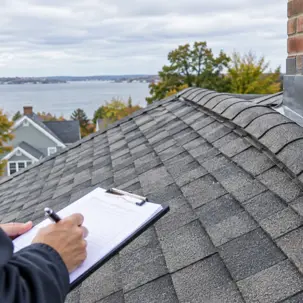
Before choosing a contractor, schedule a drone-based inspection.
A documented inspection can help evaluate:
- Roof slopes and transitions
- Flashing zones and penetrations
- Ventilation configuration
- Areas where decking condition may need closer evaluation during tear-off
Rhode Island Service Locations:
Ashaway, Barrington, Bradford, Bristol, Carolina, Central Falls, Charlestown, Chepachet, Clayville, Coventry, Cranston, Cumberland, East Greenwich, East Providence, Exeter, Forestdale, Foster, Glendale, Greene, Greenville, Harrisville,Hope,Hope Valley, Hopkinton, Jamestown, Johnston, Kenyon, Kingston, Lincoln, Little Compton, Manville, Mapleville, Middletown, Narragansett, Newport, North Kingstown, North Providence, North Scituate, North Smithfield, Oakland, Pascoag, Pawtucket, Portsmouth, Providence, Riverside, Rockville, Rumford, Saunderstown, Shannock, Scituate, Slatersville, Smithfield, Tiverton, Wakefield, Warren, Warwick, West Greenwich, West Kingston, West Warwick, Westerly, Wood River Junction, Woonsocket, Wyoming
Frequently Asked Questions
What is the difference between a prorated and non-prorated roof warranty?
A prorated warranty generally loses value over time, paying less as the roof ages. A non-prorated warranty generally maintains full stated coverage for the defined period. Exact definitions and coverage vary by manufacturer and program.
Does a 50-year shingle warranty cover installation leaks?
Not automatically. Standard material warranties typically cover manufacturing defects, not installation mistakes. To get extended labor coverage, homeowners usually need a factory-registered system warranty through an eligible certified contractor.
Can my roof warranty be transferred if I sell my Rhode Island home?
Many manufacturer warranty programs allow a one-time transfer within a defined timeframe after the home sale. Transfer rules vary, so it is important to confirm the exact program terms and deadlines.
Are zero-down financing options available for extended warranty roof replacements?
Financing may be available for qualified buyers, including zero-down options (terms vary). Ask what programs are available at the time of your estimate.
Schedule a warranty-focused roof evaluation
If you want a roof replacement plan designed around code concepts, ventilation, substrate integrity, and warranty eligibility, we can help.
Call Mighty Dog Roofing of Rhode Island: (401) 425-4108 Or book here