
If you live in Cumberland or the surrounding Providence County area, you are probably still feeling the effects of the February 2026 nor’easter. When Rhode Island gets hit with heavy, wet snow (and drifting), the risk is not just leaks. It is structural stress that can create “silent” damage you may not notice until the spring thaw.
At Mighty Dog Roofing of Rhode Island, we have seen an uptick in subtle issues after major winter events: roof decking that starts to dip, fasteners that loosen, and small framing fractures that do not show up as an obvious collapse - but can become expensive if ignored.
Why roof sag happens after heavy snow
A roof system is designed to carry load, but older homes in Cumberland (including areas like Cumberland Hill) were often built before modern snow-load expectations and updated fastening patterns.
When a large volume of snow sits on the roof for days, a few things can happen:
- The roof deck can deflect slightly between rafters or trusses.
- Repeated freeze-thaw cycles can loosen connections over time.
- Drifting can overload one roof plane more than the other.
- Rain on top of snow can dramatically increase weight.
Even after the snow melts, wood can keep a “memory” of that deflection. The result is a subtle dip that can create low spots where water lingers during spring rain.
Signs your Cumberland roof may be sagging
You do not need to climb on the roof to notice early warning signs. Look for:
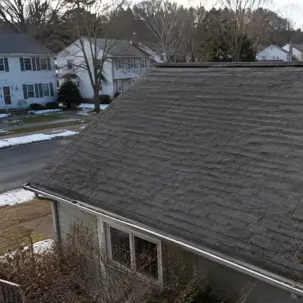
- A visible dip or wave in the roofline when viewed from the street
- Shingles that look uneven or no longer lay flat
- New cracking in interior drywall near ceiling corners
- Doors that suddenly stick (in some homes, movement can show up inside)
- Persistent leaks that start after the thaw, especially in one area
If you see any of these, it is smart to get the roof evaluated before the next heavy rain cycle.
What “code” and permitting can change in 2026
If you are repairing storm damage this year, your project may be reviewed under current Rhode Island State Building Code requirements as adopted locally. The key point for homeowners is this: once a roof is opened up, the condition of the existing layers and the wood deck matters.
In many cases, a simple patch is not the best long-term fix if:
- There are multiple existing shingle layers
- The roof deck is soft, swollen, or deteriorated
- Fasteners are not holding due to compromised sheathing
Depending on what is found during inspection and tear-off, the scope can shift from a surface repair to a more complete corrective approach so the roof can pass inspection and perform safely.
The risk of ignoring a bowed roof deck
A bowed deck is not just a cosmetic issue. Low spots can:
- Hold water longer during rain
- Accelerate shingle wear
- Increase the chance of ice damming next winter
- Create repeat leak points around flashing and valleys
If the deck or framing has been stressed, catching it early can prevent bigger structural repairs later.
Safe documentation with Drone Super Scan
Do not climb onto a potentially weakened structure to check for damage. Mighty Dog Roofing of Rhode Island uses high-definition drone inspections to document rooflines, flashing conditions, and storm-related issues from a safe distance.
This type of documentation is also useful if you are filing an insurance claim, because it helps clearly show roof conditions and suspected storm impact without putting a homeowner at risk.
If you are concerned your Cumberland roof bowed or sagged after the February 2026 storm, contact Mighty Dog Roofing of Rhode Island to schedule an inspection.
Rhode Island Service Locations:
Ashaway, Barrington, Bradford, Bristol, Carolina, Central Falls, Charlestown, Chepachet, Clayville, Coventry, Cranston, Cumberland, East Greenwich, East Providence, Exeter, Forestdale, Foster, Glendale, Greene, Greenville, Harrisville,Hope,Hope Valley, Hopkinton, Jamestown, Johnston, Kenyon, Kingston, Lincoln, Little Compton, Manville, Mapleville, Middletown, Narragansett, Newport, North Kingstown, North Providence, North Scituate, North Smithfield, Oakland, Pascoag, Pawtucket, Portsmouth, Providence, Riverside, Rockville, Rumford, Saunderstown, Shannock, Scituate, Slatersville, Smithfield, Tiverton, Wakefield, Warren, Warwick, West Greenwich, West Kingston, West Warwick, Westerly, Wood River Junction, Woonsocket, Wyoming
FAQ
How much snow can a Rhode Island roof hold?
Many modern roof structures are designed for significant snow load, but real-world conditions vary. Heavy, wet snow, drifting, and rain-on-snow events can increase roof load quickly, especially on older homes.
Can heavy snow cause roof sag without an obvious collapse?
Yes. Some damage is subtle: decking can deflect, fasteners can loosen, and framing can develop small fractures. These issues may not be obvious until the thaw, when leaks or uneven rooflines become easier to spot.
Does Rhode Island building code require a full tear-off in 2026?
It depends on the existing roof layers and the condition of the wood deck. If there are multiple layers or the decking is deteriorated, a tear-off and deck repairs are often required to complete a safe, inspection-ready repair.
Is it safe to walk on a roof that might be sagging?
Not always. If you suspect structural stress or sagging, it is safer to avoid walking on the roof and schedule a professional inspection.