
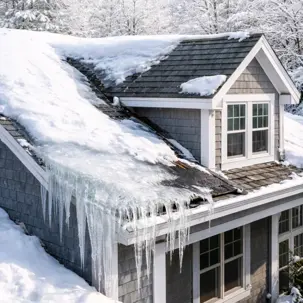
Rhode Island winters create the perfect conditions for ice dam damage. Snow builds up, daytime sun starts a melt cycle, and overnight temperatures refreeze that water at the colder roof edges. For many homeowners, the result is an ice dam that traps water where it does not belong.
The problem is that serious winter roof damage is not always obvious from the ground. A roof can look acceptable from the driveway while still hiding moisture intrusion, lifted shingles, flashing damage, and deteriorating decking beneath the surface.
Why Ice Dams Are So Destructive in Rhode Island
An ice dam forms when heat escaping from the home melts snow higher on the roof. That water runs down toward the colder eaves, where it refreezes and creates a barrier of ice.
Once that barrier forms, additional meltwater can back up under the shingles. Asphalt shingles are designed to shed water, not hold standing water under winter pressure. Over time, that backup can affect underlayment, roof decking, insulation, and even interior wall or ceiling finishes.
Why a Driveway Inspection Can Miss Serious Problems
A ground-level inspection has limits. From the driveway, a contractor may be able to spot obvious missing shingles or visible sagging, but many winter-related roofing issues are far more subtle.
Lifted shingle edges, granule loss, flashing deterioration, and damage concentrated at eaves or valleys may not be clearly visible from below. That means a quick visual estimate can miss important warning signs, especially on steeper roofs or homes with complex rooflines.
The Risk of Hidden Moisture and Roof Deck Damage
One of the biggest concerns after repeated ice dam events is hidden moisture intrusion. When water gets beneath the roofing system, it can begin to affect the wood roof deck and surrounding materials.
If damaged decking is not identified before repair or replacement work begins, the roof system may not perform as intended. Moisture-related deterioration can also contribute to attic air quality issues, insulation problems, and recurring leaks if the root cause is not addressed.
Why Better Inspection Technology Matters
Homeowners should not have to make a major roofing decision based on guesswork. Better documentation leads to better recommendations.
Mighty Dog Roofing of Rhode Island uses advanced drone inspections to capture detailed roof imagery, including vulnerable areas such as eaves, valleys, flashing transitions, and other hard-to-see sections. This helps homeowners review visible roof conditions more clearly and supports a more informed conversation about repairs, replacement, ventilation, and winter protection.
A Strong Roof System Starts Below the Shingles
A roof that performs well through Rhode Island winters depends on more than the shingles alone. It also depends on sound decking, proper ventilation, effective ice and water protection, and quality installation.
As an Owens Corning Platinum Preferred contractor, Mighty Dog Roofing of Rhode Island follows manufacturer-backed standards designed to help roofing systems perform more reliably in harsh weather conditions.
If your home dealt with ice dams this winter, or if you are concerned about hidden damage, a detailed roof inspection can help you understand what is visible, what may need closer evaluation, and what steps make the most sense next.
Rhode Island Service Locations:
Ashaway, Barrington, Bradford, Bristol, Carolina, Central Falls, Charlestown, Chepachet, Clayville, Coventry, Cranston, Cumberland, East Greenwich, East Providence, Exeter, Forestdale, Foster, Glendale, Greene, Greenville, Harrisville,Hope,Hope Valley, Hopkinton, Jamestown, Johnston, Kenyon, Kingston, Lincoln, Little Compton, Manville, Mapleville, Middletown, Narragansett, Newport, North Kingstown, North Providence, North Scituate, North Smithfield, Oakland, Pascoag, Pawtucket, Portsmouth, Providence, Riverside, Rockville, Rumford, Saunderstown, Shannock, Scituate, Slatersville, Smithfield, Tiverton, Wakefield, Warren, Warwick, West Greenwich, West Kingston, West Warwick, Westerly, Wood River Junction, Woonsocket, Wyoming
FAQ
Can an ice dam damage a roof in Rhode Island?
Yes. Ice dams can force water back beneath the shingles, which may affect underlayment, roof decking, insulation, and interior finishes if the problem is severe enough.
How do I know if I have hidden roof rot?
Possible warning signs include sagging roof areas, interior water stains, attic moisture, or musty odors. In many cases, a professional inspection is needed to identify visible signs of deeper roof damage.
Why is a drone roof inspection better than a driveway inspection?
A drone inspection can provide clearer visual access to roof areas that are difficult to evaluate from the ground, including eaves, valleys, and flashing details where winter damage often develops.
Can a roofer tell if my roof deck is damaged from the ground?
Not reliably in many cases. Some signs may be visible from below, but hidden moisture intrusion or decking deterioration often requires closer inspection and better documentation.
Will insurance cover ice dam roof damage?
Coverage depends on the homeowner’s policy and the specific circumstances of the loss. Homeowners should review their policy and speak with their insurance carrier to understand what may be covered.