
When you look up at your roof from the yard in Smithfield or North Providence, it can look totally fine. Shingles are still attached. Nothing is obviously missing. No dramatic cave-ins.
But Rhode Island winters do not just test roofs with wind and cold. They also create a type of wear that is easy to miss until it turns into a leak.
We call it “micro-scraping” - and it is one of the most common reasons asphalt shingle roofs age faster than homeowners expect in New England.
What is “micro-scraping”?
The colored “sand” on top of your shingles is not sand. It is a layer of ceramic granules.
Those granules do important jobs:
- Help protect the asphalt from UV sunlight
- Improve fire resistance ratings
- Add color and help the shingle shed water properly
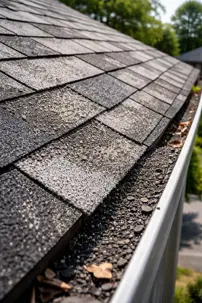
During winter, heavy sheets of snow and ice can slide down the roof. When that happens, the ice can act like coarse sandpaper. It can scrape granules off the shingle surface and carry them toward the gutters.
Why granule loss matters (summer is when it shows up)
Granule loss is not just cosmetic.
If enough granules are removed, the asphalt underneath can become exposed. Once Rhode Island hits hot July sun, exposed asphalt can:
- Overheat and dry out
- Blister
- Crack
- Lose flexibility
That is when small winter damage can turn into late-summer leaks during thunderstorms.
The roof can look fine from the ground
This is the tricky part.
From the ground, granule loss is hard to diagnose. Homeowners often only notice it indirectly:
- Granules collecting in gutters or at downspout exits
- Dark streaks or “bald” spots on shingles (visible only up close)
- Faster shingle aging on certain roof planes
Why a Drone Super Scan helps
If you suspect granule loss, the goal is simple: document what is happening before it becomes a leak.
A drone inspection can capture high-resolution imagery of the roof surface and roof edges without climbing on the roof.
At Mighty Dog Roofing of Rhode Island, our Drone Super Scan is designed to provide:
- Clear roof-surface photos (so you can see what we see)
- A safer way to inspect steep or high roofs
- Better documentation for repair planning
What to do if you find granule loss
The right next step depends on how severe the wear is and whether it is localized or widespread.
A professional inspection can help determine whether you need:
- A targeted repair
- A maintenance plan
- Or a replacement plan based on roof age and overall condition
Serving Smithfield and North Providence
We serve homeowners across Rhode Island, including Smithfield (02917) and North Providence (02904).
Do not wait for a leak to tell you your roof is failing.
If you are seeing granules in your gutters or want a transparent roof inspection with photo documentation, contact Mighty Dog Roofing of Rhode Island.
Call (401) 425-4108 or Contact us.
Rhode Island Service Locations:
Ashaway, Barrington, Bradford, Bristol, Carolina, Central Falls, Charlestown, Chepachet, Clayville, Coventry, Cranston, Cumberland, East Greenwich, East Providence, Exeter, Forestdale, Foster, Glendale, Greene, Greenville, Harrisville,Hope,Hope Valley, Hopkinton, Jamestown, Johnston, Kenyon, Kingston, Lincoln, Little Compton, Manville, Mapleville, Middletown, Narragansett, Newport, North Kingstown, North Providence, North Scituate, North Smithfield, Oakland, Pascoag, Pawtucket, Portsmouth, Providence, Riverside, Rockville, Rumford, Saunderstown, Shannock, Scituate, Slatersville, Smithfield, Tiverton, Wakefield, Warren, Warwick, West Greenwich, West Kingston, West Warwick, Westerly, Wood River Junction, Woonsocket, Wyoming
FAQ
Why is there sand in my gutters after winter?
That “sand” is often shingle granules. Snow and ice sliding off a roof can scrape granules from asphalt shingles and wash them into gutters.
Is it normal to have shingle granules in the gutters?
A small amount can be normal over time, especially on older roofs. A sudden increase after winter can indicate accelerated wear from ice movement or storm conditions.
How can a drone inspect my roof for damage?
A drone roof inspection uses high-resolution photos to document roof-surface issues like visible granule loss patterns, lifted shingles, damaged flashing, or cracked sealant - without walking on the roof.
Does granule loss mean I need a new roof?
Not always. It depends on roof age, how widespread the granule loss is, and whether the shingles are cracking or losing seal. A professional inspection can confirm whether repair, maintenance, or replacement makes the most sense.