Owning a home in the East Side of Providence, Federal Hill, or Elmwood means being a steward of history. Many roofs in Providence historic districts use slate, clay tile, or aged cedar shingles, and those materials can be surprisingly fragile.
That is why a traditional inspection (ladder + walking the roof) is not always the best first step. On older systems, foot traffic can crack slate, loosen fasteners, or disturb aging details. In some cases, the inspection can cause damage that was not there before.
In 2026, Mighty Dog Roofing of Rhode Island uses drone-based inspections to help homeowners protect historic roofs while still getting the information they need to make smart decisions.
Why drones are a better fit for historic roof inspections
Non-invasive documentation
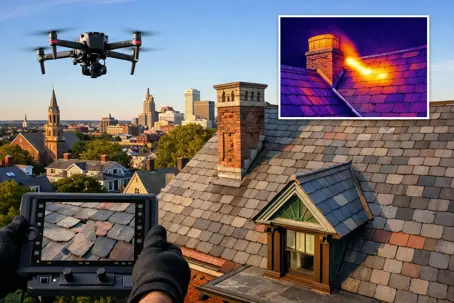
A drone inspection is non-contact. We can capture detailed roof imagery without stepping on slate tiles or walking delicate cedar.
This is especially useful for: - Slate and clay tile roofs - Older cedar shingle roofs - Steep or complex rooflines - Homes with fragile flashing and masonry transitions
High-resolution imagery you can actually see
Drone imagery helps document: - Cracked, missing, or slipped slate - Lifted shingles and wind wear - Rusted or failing flashing - Chimney and masonry transitions - Valleys, dormers, and roof edges
It also helps homeowners understand the “why” behind a recommendation because you can see the same evidence we see.
Thermal imaging (when appropriate)
In certain situations, thermal imaging may be used to help identify temperature differences that can be consistent with moisture patterns or insulation issues.
Important: Thermal is not included in every scan, and it does not replace a full diagnostic process. If we see signs that a leak may be active, we may recommend additional steps like an attic inspection, targeted moisture checks, or close-up detail work.
Better documentation for planning and insurance
Historic homes often require more planning and clearer documentation.
A drone report can be helpful for: - Tracking roof condition over time - Supporting repair scope discussions - Providing clear photos for insurance documentation (when storm damage is suspected)
What to do if you own a historic home in Providence
If you have a Victorian in Blackstone, a triple-decker in the West End, or a historic property anywhere in Providence, start with a non-contact inspection and a clear plan.
What to do next: - Note any interior staining, drafts, or musty attic smells - Take photos of any ceiling stains and record the date - Schedule a drone inspection to document roof conditions safely - Review findings and prioritize repairs (flashing, valleys, edges) before they become leaks
Schedule a safer historic roof inspection
Mighty Dog Roofing of Rhode Island provides drone roof inspections designed for historic materials and Providence weather.
Call/text (401) 425-4108.
Rhode Island Service Locations:
Ashaway, Barrington, Bradford, Bristol, Carolina, Central Falls, Charlestown, Chepachet, Clayville, Coventry, Cranston, Cumberland, East Greenwich, East Providence, Exeter, Forestdale, Foster, Glendale, Greene, Greenville, Harrisville,Hope,Hope Valley, Hopkinton, Jamestown, Johnston, Kenyon, Kingston, Lincoln, Little Compton, Manville, Mapleville, Middletown, Narragansett, Newport, North Kingstown, North Providence, North Scituate, North Smithfield, Oakland, Pascoag, Pawtucket, Portsmouth, Providence, Riverside, Rockville, Rumford, Saunderstown, Shannock, Scituate, Slatersville, Smithfield, Tiverton, Wakefield, Warren, Warwick, West Greenwich, West Kingston, West Warwick, Westerly, Wood River Junction, Woonsocket, Wyoming
FAQ
Are drone roof inspections safe for historic homes?
Drone inspections are one of the safest options for historic roofs because they are non-contact. They help document roof conditions without the risk of cracking slate or disturbing fragile tile and cedar.
Can a drone see roof leaks?
A drone can document roof conditions and potential entry points. In some cases, thermal imaging may help identify temperature differences that can be consistent with moisture patterns. Confirming an active leak may still require additional inspection steps, depending on what we find.