
If you are buying a home in Rhode Island and the inspector flags the roof as “at the end of its useful life,” your first instinct is likely to ask the seller to replace it before closing. It feels like the easiest solution: the seller pays the bill, the bank is happy, and you move into a house with a new roof.
But as residential roofing experts, we warn buyers across the Providence metro area that letting the seller control the roof replacement can be one of the most dangerous financial traps in real estate.
The 2026 Rhode Island Housing Squeeze Makes This Risk Worse
In early 2026, Rhode Island buyers are dealing with historically low housing inventory (often described as roughly a two-month supply). In plain terms: there are not many homes for sale, and the ones that hit the market move fast.
That pressure changes behavior.
When buyers feel they have to waive contingencies, shorten timelines, or accept “quick fixes” to keep a deal alive, sellers and low-bid contractors know they can sometimes get away with shortcuts. Roofing is one of the easiest places for those shortcuts to hide because a roof can look “new” from the ground while the system underneath is still failing.
We recently saw a situation where a seller tried to hire the cheapest roofer possible to install a second layer of shingles over a failing system just to push the closing through. The buyer reached out to Mighty Dog Roofing of Rhode Island for a second opinion. With the right documentation and negotiation strategy, the buyer avoided inheriting hidden rot and a roof that would fail early.
Here is why you should be cautious about seller-controlled roof work and how to protect yourself instead.
The Conflicting Goals of Buyers and Sellers
This problem comes down to incentives.
- The buyer’s goal: you want a complete roofing system that protects your family, survives Rhode Island nor’easters, and performs for decades.
- The seller’s goal: the seller wants to pass appraisal and close the sale. They are moving out. They have little incentive to pay for premium underlayment, address hidden decking rot, or improve ventilation.
When a seller handles the replacement, the work often goes to the lowest bidder. That is where invisible corners get cut.
The Layover Trick (Second Layer Over a Failing Roof)
One of the most common tactics used to satisfy a lender quickly is a layover, which is nailing a new layer of asphalt shingles directly over the old layer.
While Rhode Island rules have historically allowed up to two layers in certain circumstances, a layover is a bad deal for a new homeowner.
A layover can:
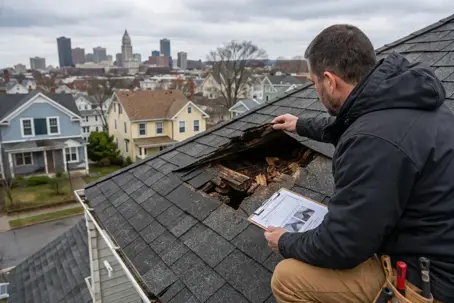
- Hide wood rot because you cannot inspect the decking without a tear-off
- Trap heat and shorten shingle life
- Make future repairs harder and more expensive
- Reduce or eliminate eligibility for enhanced manufacturer warranty options that require specific system components and installation standards
If the seller pays for a layover, you may be buying a roof that looks new but is built on a failing foundation.
The Warranty Transfer Trap
Even if the seller agrees to a full tear-off, warranty details can still be a problem.
Many warranties are registered to the original purchaser. Some can be transferred, but the process may be time-sensitive, require paperwork shortly after closing, and include transfer fees.
More importantly, if the roof was installed incorrectly, the manufacturer can deny coverage regardless of what the paperwork says.
The Safer Strategy: Negotiate a Credit and Control the Process
Instead of demanding the seller replace the roof, many buyers are better protected by negotiating a closing cost credit or a price reduction based on a professional roofing estimate.
By taking the credit and handling the replacement yourself after closing, you gain control:
- You pick the contractor based on quality, not speed
- You can require a full tear-off and a documented decking inspection
- You can ensure ventilation, flashing, and water management details are done correctly
- You can register any eligible warranty options in your name from day one
Think Like an Investor (Even If This Is Your Forever Home)
Even if you are not a real estate investor, your home is still a major asset. The roof is not just a cosmetic upgrade. It is one of the biggest “protect the structure” systems on the property.
A seller-controlled quick fix can quietly destroy your return on investment:
- Hidden rot becomes a surprise repair that eats your renovation budget
- Poor ventilation and shortcuts can shorten shingle life, forcing an earlier replacement
- A roof that fails early can hurt resale value and complicate future inspections
If your plan is to build equity, renovate over time, or hold the home long-term, controlling the roof replacement is one of the cleanest ways to protect the investment.
Mighty Dog Roofing of Rhode Island holds elite manufacturer credentials, including Owens Corning Platinum Preferred and CertainTeed 5-Star Siding Contractor status. That can allow qualified homeowners to access enhanced warranty options when systems are installed to specification.
Do Not Guess During Your Inspection Period
A general home inspection is valuable, but it is often limited to what can be seen from the ground or a ladder.
If you are under contract on a Rhode Island home and the roof is questionable, schedule a documented roof inspection before your inspection period ends.
Mighty Dog Roofing of Rhode Island offers Drone Super Scan inspections that capture high-definition imagery of the full roof system. This documentation can support a clearer scope of work and help you negotiate a credit with confidence. Contact us Now!
Rhode Island Service Locations:
Ashaway, Barrington, Bradford, Bristol, Carolina, Central Falls, Charlestown, Chepachet, Clayville, Coventry, Cranston, Cumberland, East Greenwich, East Providence, Exeter, Forestdale, Foster, Glendale, Greene, Greenville, Harrisville,Hope,Hope Valley, Hopkinton, Jamestown, Johnston, Kenyon, Kingston, Lincoln, Little Compton, Manville, Mapleville, Middletown, Narragansett, Newport, North Kingstown, North Providence, North Scituate, North Smithfield, Oakland, Pascoag, Pawtucket, Portsmouth, Providence, Riverside, Rockville, Rumford, Saunderstown, Shannock, Scituate, Slatersville, Smithfield, Tiverton, Wakefield, Warren, Warwick, West Greenwich, West Kingston, West Warwick, Westerly, Wood River Junction, Woonsocket, Wyoming
FAQ
Should I let the seller replace the roof before closing in Rhode Island?
Usually, no. Sellers are motivated to choose the fastest and cheapest option to close the sale, which can lead to shortcuts, hidden decking issues, and warranty problems. A safer approach is often negotiating a seller credit and hiring your own contractor after closing.
Can a seller put a new roof over an old one in Rhode Island?
In some cases, local rules may allow two layers, but a layover is strongly discouraged. It can hide damaged decking, trap heat, and reduce eligibility for enhanced warranty options. A full tear-off is the best way to verify the roof system.
Do roofing warranties transfer to a new buyer?
It depends on the manufacturer and the warranty type. Some warranties can be transferable, but paperwork deadlines and fees may apply. Coverage can also be denied if the roof was not installed to specification.
How do I negotiate a bad roof when buying a house?
Get a professional, documented estimate during your inspection period. Use that scope to request a closing cost credit or price reduction so you can control the quality of the replacement after closing.