
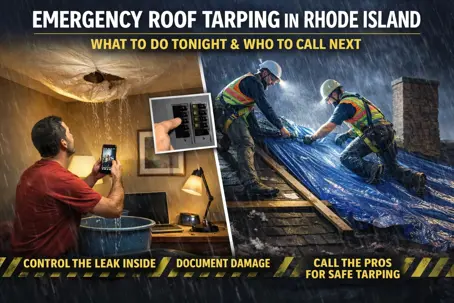
If your roof is leaking right now, you are not looking for a generic article. You need a plan you can follow in the next 10 minutes.
This guide is written for Rhode Island storms, wind-driven rain, and winter freeze-thaw. It covers what you can safely do tonight, what to avoid, and how professional roof tarping should be done so it actually holds.
Step 1 (first 5 minutes): control the water inside
Before you think about the roof, reduce interior damage.
- Put a bucket under the drip.
- Move furniture and electronics.
- If water is near a ceiling light or outlet, shut off power to that area at the breaker.
- Poke a small drain hole in a bulging ceiling bubble (use a screwdriver) and catch the water in a bucket. This prevents a larger collapse.
Step 2: document everything for insurance (do this before cleanup)
In Rhode Island, storm damage claims can move faster when documentation is clean.
Take photos and short videos of: - The interior leak path (ceiling, walls, attic if safe) - Any visible exterior damage from the ground - Weather conditions and time - Damaged personal property
Keep receipts for emergency supplies (tarps, fans, dehumidifier rental). Many policies treat this as reasonable mitigation.
Step 3: do NOT climb a wet or damaged roof
This is the part most articles understate.
A roof that is leaking is often: - Wet and slippery - Structurally compromised - Covered in loose granules or debris
Falls are the number one risk. If you cannot do it from the ground safely, do not do it.
Who can tarp a roof in Rhode Island?
In most cases, you want an emergency roofing company (not a general handyman) because tarping is not just throwing plastic over a hole.
A professional emergency roofer should: - Find the actual entry point (often not directly above the interior drip) - Choose a tarp large enough to extend past the damaged area - Secure it so wind cannot get underneath - Avoid covering critical exhaust vents or creating carbon monoxide risks - Provide photos and notes you can use for your insurance claim
The 3 tarping mistakes that cause worse damage
Mistake 1: nailing through the tarp with no reinforcement
Loose fasteners tear out in wind. Proper installs typically use reinforced edges and wood battens (like 2x4s) to spread load.
Mistake 2: tarping the wrong spot
Water travels. The leak inside might be 6 to 15 feet away from the roof entry point depending on slope, underlayment, and framing.
Mistake 3: blocking vents or chimneys
Never cover a chimney or a combustion exhaust vent. If you are not 100% sure what a penetration is, do not cover it.
How long does a roof tarp last?
A tarp is temporary. Sun, wind, and temperature swings break down materials. In real-world Rhode Island weather, you should treat tarping as short-term damage control while you schedule the permanent repair.
What does emergency roof tarping cost in Rhode Island?
Pricing depends on: - Roof height and pitch - Access and safety requirements - Size of damaged area - Whether multiple sections need coverage - Time of day (after-hours emergency)
The most important thing: a cheap tarp job that blows off can cost more than doing it right the first time.
What happens after tarping (the part homeowners forget)
Tarping is step one. Step two is figuring out why the roof failed.
After the immediate leak is controlled, we recommend a documented inspection (including drone imaging when appropriate) to identify: - Missing or creased shingles - Lifted ridge caps - Flashing failures at chimneys and walls - Ice dam related damage - Tree impact points
Then you can decide: repair vs partial replacement vs full replacement.
Rhode Island storm notes (local reality)
- Coastal wind events can lift shingles even when they look fine from the street.
- Freeze-thaw can turn a small flashing gap into a major leak.
- Ice dams often show up as interior leaks that look like “mystery” water.
Rhode Island Service Locations:
Ashaway, Barrington, Bradford, Bristol, Carolina, Central Falls, Charlestown, Chepachet, Clayville, Coventry, Cranston, Cumberland, East Greenwich, East Providence, Exeter, Forestdale, Foster, Glendale, Greene, Greenville, Harrisville,Hope,Hope Valley, Hopkinton, Jamestown, Johnston, Kenyon, Kingston, Lincoln, Little Compton, Manville, Mapleville, Middletown, Narragansett, Newport, North Kingstown, North Providence, North Scituate, North Smithfield, Oakland, Pascoag, Pawtucket, Portsmouth, Providence, Riverside, Rockville, Rumford, Saunderstown, Shannock, Scituate, Slatersville, Smithfield, Tiverton, Wakefield, Warren, Warwick, West Greenwich, West Kingston, West Warwick, Westerly, Wood River Junction, Woonsocket, Wyoming
FAQ
Who should I call to tarp my roof in Rhode Island?
Call an emergency roofing company that offers storm damage service. They can tarp safely, avoid vent and chimney hazards, and document the damage for insurance.
Can I tarp my roof myself?
If you can do it safely from the ground, you can reduce damage temporarily. But climbing a wet or damaged roof is dangerous. Professional tarping is recommended for steep, high, or storm-damaged roofs.
How long can a tarp stay on a roof?
A tarp is a temporary measure. You should schedule permanent repairs as soon as possible because wind and sun can loosen or degrade the tarp.
Will homeowners insurance pay for roof tarping?
Many policies cover reasonable emergency mitigation after a covered event, but coverage varies. Document the damage, keep receipts, and confirm details with your adjuster.
Call to Action
If you have an active leak or storm damage in Providence County or coastal Rhode Island, call Mighty Dog Roofing of Rhode Island at (401) 425-4108.
We can help you stabilize the situation fast, document the damage, and give you a clear repair plan.
Ask about our Drone Super Scan for post-storm documentation and a clean scope of work.