
Owning a historic home in Rhode Island is a privilege, but replacing an aging slate roof in a local historic district is rarely simple. Whether the property is a Victorian on Providence’s East Side, a colonial in East Greenwich, or a landmark home in Newport, roof replacement often requires far more than choosing a material and signing a contract.
In many Rhode Island historic districts, exterior changes must go through a formal review process before work begins. That means homeowners may need to secure a Certificate of Appropriateness or similar local approval before replacing a slate roof. Choosing the wrong material or starting work too early can create delays, added costs, and compliance problems.
Why Historic District Roof Replacements Are Different
Replacing a roof in a designated historic district is not a standard home improvement project. Historic District Commissions review visible exterior changes to help preserve the architectural character of the neighborhood.
For homeowners, that creates a difficult balancing act. The roof may be actively failing, but the replacement still needs to satisfy aesthetic expectations, local review standards, and practical budget limits.
The Challenges of Replacing Real Slate
Natural slate can be historically appropriate, but it also creates major hurdles for many Rhode Island homeowners.
First, real slate is extremely heavy. On older homes, that can mean added structural concerns, especially if rafters or roof decking have been affected by age or long-term moisture intrusion.
Second, natural slate replacement is expensive. Material sourcing, transportation, specialty labor, and structural reinforcement can push costs well beyond what many homeowners expect.
Third, slate repairs are not always simple. While slate is durable, individual tiles can crack from impact or foot traffic, and Rhode Island freeze-thaw cycles can worsen existing vulnerabilities over time.
Why Premium Synthetic Slate Is Changing the Conversation
For many historic properties, premium synthetic slate offers a practical middle ground between preservation goals and modern performance.
As an Authorized Brava Synthetic Roofing Contractor, Mighty Dog Roofing of Rhode Island installs premium composite slate systems designed to replicate the texture, profile, and shadow lines of natural slate while reducing many of the structural and maintenance concerns tied to stone roofing.
Synthetic slate is significantly lighter than natural slate, which may reduce the need for major framing reinforcement on older homes. It also offers modern durability benefits, including strong resistance to impact, moisture, and harsh weather exposure common in Rhode Island coastal and inland climates.
How Better Documentation Can Support the Approval Process
Historic review boards do not want vague claims. They want clear documentation showing why replacement is needed and how the proposed material will preserve the home’s visual character.
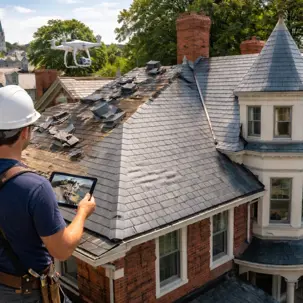
That is why a detailed inspection matters. Mighty Dog Roofing of Rhode Island uses advanced drone imaging to document visible roof deterioration, identify problem areas, and help homeowners present a more professional case during the review process. When paired with product samples, color matching, and a clear scope of work, that documentation can help make the approval conversation more productive.
Protecting Historic Character Without Sacrificing Performance
The right roofing plan should respect both the home and the approval process. In many cases, that means evaluating whether natural slate is truly the best fit or whether a premium synthetic alternative can deliver the appearance historic boards expect with fewer structural and financial drawbacks.
If your historic Rhode Island home has a failing slate roof, Mighty Dog Roofing of Rhode Island can help you evaluate the condition, compare material options, and prepare for a more informed replacement process. Contact Us Now!
Rhode Island Service Locations:
Ashaway, Barrington, Bradford, Bristol, Carolina, Central Falls, Charlestown, Chepachet, Clayville, Coventry, Cranston, Cumberland, East Greenwich, East Providence, Exeter, Forestdale, Foster, Glendale, Greene, Greenville, Harrisville,Hope,Hope Valley, Hopkinton, Jamestown, Johnston, Kenyon, Kingston, Lincoln, Little Compton, Manville, Mapleville, Middletown, Narragansett, Newport, North Kingstown, North Providence, North Scituate, North Smithfield, Oakland, Pascoag, Pawtucket, Portsmouth, Providence, Riverside, Rockville, Rumford, Saunderstown, Shannock, Scituate, Slatersville, Smithfield, Tiverton, Wakefield, Warren, Warwick, West Greenwich, West Kingston, West Warwick, Westerly, Wood River Junction, Woonsocket, Wyoming
FAQ
Can I use synthetic slate on a historic home in Rhode Island?
Possibly, yes. Approval depends on the local Historic District Commission and the specific property, but premium synthetic slate products are often considered when they closely match the appearance, thickness, and texture of natural slate.
Why do I need approval to replace a roof in a historic district?
If your home is in a designated historic district, exterior changes may require formal local approval before work begins. This helps preserve the visual character and historic integrity of the neighborhood.
Is synthetic slate lighter than natural slate?
Yes. Premium synthetic slate is significantly lighter than natural quarried slate, which can be an important advantage on older homes with aging framing systems.
Is natural slate always the best choice for a historic home?
Not always. While natural slate may be historically authentic, it can also bring major cost, weight, and maintenance challenges. In some cases, a high-quality synthetic slate may be a more practical option.
How can a roof inspection help with HDC approval?
A detailed inspection with clear visual documentation can help show the condition of the existing roof, support the need for replacement, and strengthen the homeowner’s presentation during the review process.