
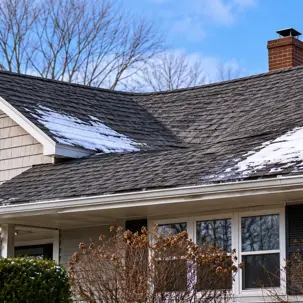
Harsh winter weather in northern Rhode Island can leave homeowners with a long maintenance backlog. In Cumberland and nearby Providence County communities like Lincoln, Woonsocket, and North Smithfield, the first concern after heavy, wet snow is usually stopping active leaks.
But there is another problem that can stay hidden until it becomes expensive: localized roofline sagging.
A small dip in the roof plane can indicate roof deck deflection, fastener pull-through, or framing stress. It rarely looks like an emergency in the moment. The risk is what happens next: low spots can hold moisture longer, accelerate shingle wear, and create a pathway for rot once spring rain patterns return.
What we mean by roof sagging (and why it matters)
A roof should look flat and consistent from end to end. A sag is a visible low area in the roof plane or ridge line that was not there before.
Even a subtle change can matter because it may signal:
- Decking that flexed under uneven snow load
- Rafters or truss members that were overstressed
- Fasteners that loosened as wood fibers compressed
If you are seeing a new dip after a nor’easter, the goal is not to guess. The goal is to confirm the cause safely and build a repair plan that prevents water damage.
Why Structural Deflection Happens in Northern Rhode Island
A residential roof structure is designed to carry weight when that weight is fairly balanced. The problem is that nor’easters often create uneven loading due to wind-driven drifting.
Older homes throughout the Cumberland Hill area and similar neighborhoods in Lincoln and North Smithfield may also have framing systems that were built long before modern best practices became common.
When a large snow volume consolidates on one roof plane, a predictable chain of stress can occur:
- Sheathing deflection: decking can flex between rafters, or rafters can split under uneven load.
- Freeze-thaw prying: meltwater refreezes at eaves and edges, expanding in small gaps and weakening wood around fasteners.
- Weight multiplier events: rain falling on top of existing snow packs can rapidly increase total load.
Even after snow clears, wood fibers can retain a kind of deflection memory. That can leave a shallow low spot where water lingers longer, speeding up granule loss and increasing the odds of deck deterioration.
External Warning Signs You Can Spot from the Ground
If you suspect sagging, do not climb onto the roof. If the structure is compromised, adding your body weight can trigger a localized failure.
Instead, step back across the street or to the far end of your driveway and look for:
Wave-like ridge lines
Your ridge line should look straight. If you see a dip, bow, or wave pattern, the ridge beam or supporting framing may have shifted.
Uneven shingle courses
Look at the horizontal shingle lines. If they suddenly curve downward, buckle, or appear to pull away from the deck, the surface underneath may have changed shape.
New interior clues upstairs
Structural shifting often shows up inside too. Check for:
- New hairline cracks near ceiling corners or above door frames
- Doors or windows that suddenly stick
- A new ceiling ripple or soft spot (do not press hard)
What to do next (safest path)
If you notice any of the signs above, the next step is to get eyes on the roof without putting anyone at risk.
A Drone Inspection + Repair Plan helps you:
- Document the roof plane and ridge line from multiple angles
- Identify likely low spots, lifted shingles, or impact areas
- Prioritize repairs before spring and summer rain cycles
- Decide whether the issue is isolated (spot repair) or part of a bigger system problem
If needed, we can also help you map out next steps so you are not over-fixing the roof or ignoring a problem that will grow.
Rhode Island Service Locations:
Ashaway, Barrington, Bradford, Bristol, Carolina, Central Falls, Charlestown, Chepachet, Clayville, Coventry, Cranston, Cumberland, East Greenwich, East Providence, Exeter, Forestdale, Foster, Glendale, Greene, Greenville, Harrisville,Hope,Hope Valley, Hopkinton, Jamestown, Johnston, Kenyon, Kingston, Lincoln, Little Compton, Manville, Mapleville, Middletown, Narragansett, Newport, North Kingstown, North Providence, North Scituate, North Smithfield, Oakland, Pascoag, Pawtucket, Portsmouth, Providence, Riverside, Rockville, Rumford, Saunderstown, Shannock, Scituate, Slatersville, Smithfield, Tiverton, Wakefield, Warren, Warwick, West Greenwich, West Kingston, West Warwick, Westerly, Wood River Junction, Woonsocket, Wyoming
FAQ
How much snow accumulation can a standard Rhode Island roof safely support?
Modern structures are designed for significant snow loads, but real-world conditions vary. Heavy wet snow, drifting, and rain-on-snow events can overwhelm older or unreinforced framing systems faster than homeowners expect.
Can a roof develop a sag without causing an immediate interior leak?
Yes. Framing or decking can deflect without immediately tearing the waterproofing layers. The low spot may pond water over time, eventually leading to deck rot and a leak months later.
Is it safe to shovel snow or clear debris off a sagging roof?
No. If a roof is already showing signs of deflection, adding a person can trigger a localized structural failure. Keep inspections ground-based and use professionals with the right equipment.
What is the difference between a normal roofline and a problem sag?
A roofline that has always looked slightly uneven may be cosmetic. A new change after a storm is the concern. If you can point to a new dip, wave, or shingle distortion that was not there before, it is worth documenting and inspecting.
Can ice dams cause roof sagging?
Ice dams do not usually cause a roof to sag by themselves, but they can worsen moisture intrusion at the edges. If sagging creates a low spot, water can linger longer and increase the risk of deck deterioration.
Who should I call if I suspect roof sagging in Cumberland or nearby towns?
Start with a qualified roofing contractor who can document conditions safely and help you build a repair plan. If structural evaluation is required, you may also be advised to involve a licensed structural professional.