
A full roof replacement is a project most property owners handle once or twice in a lifetime. Because it happens so infrequently, it is easy to rely on outdated assumptions about construction standards, permitting, and material performance.
In Rhode Island, a successful roof replacement is not just about curb appeal. It is about building a system that can handle local weather demands and meet current expectations for structural integrity, thermal performance, and documentation.
As of 2026, Rhode Island has adopted updated building and energy standards, and local enforcement can be stricter depending on your municipality. Between structural mandates and a highly scrutinized residential property insurance market, managing a roof installation requires far more than simply picking a shingle color and hiring a low-bid crew. Always verify exact requirements with your local building official.
This guide breaks down the structural, financial, and technical factors that dictate a successful roof replacement in Providence, Cranston, Warwick, and the surrounding metro area.
The regulatory reality: navigating RI state codes
The days of treating a residential roof replacement as a simple cosmetic upgrade are over. Building officials across Providence County are enforcing structural and thermal envelope integrity with increased scrutiny.
2026 Rhode Island roof compliance focus areas
Structural code (RISBC-2): Based on the 2021 IRC with state amendments, this code generally emphasizes deck inspection, solid wood nailing bases, and wind-uplift fastening requirements.
Energy standard (2024 IECC): Adopted statewide, this framework influences attic insulation targets and whole-home energy efficiency expectations.
The end of the roof over shortcut
One of the biggest shifts in local enforcement revolves around the historical practice of roofing over, which is installing a new layer of shingles on top of an existing layer to avoid tear-off costs.
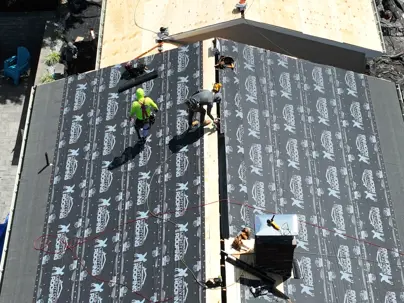
In many Rhode Island towns, inspectors increasingly require tear-off so the deck can be verified and fasteners can seat into sound wood. For a modern wind-rated roofing system to perform as intended, roof nails need to bite into a solid, structurally sound deck. Multiple layers can hide rot and can contribute to fasteners loosening over time.
Critical ice and water barrier expectations
Rhode Island winters bring heavy snow, rapid thaws, and freezing winds. That combination can create ice dam conditions where meltwater is pushed back under shingles.
Many code and inspection expectations focus on a self-adhering ice and water membrane at the eaves. A common requirement is that it extends to a point at least 24 inches inside the interior wall line of the structure. Valley transitions, chimney bases, and dormer walls are also frequent leak-risk zones where underlayment and flashing details matter.
Four signs your wood decking requires replacement
When a roofing project is quoted, the single largest variable that can impact the final invoice is the condition of the underlying wood decking. Because this wood is hidden, its true condition cannot be fully verified until tear-off is complete.
Here are four common criteria that determine whether plywood or OSB needs replacement:
1) Nail pull resistance and punky wood
If wood fibers are soft, dry-rotted, or punky, nails may not set with the resistance needed to hold during wind uplift.
2) Ply delamination
When moisture migrates into modern sheathing, adhesive layers can break down. Plies can separate and lose load-bearing capacity.
3) Non-compliant gapping and spaced board decking
Older homes may have dimensional board decking. If boards shrink and leave wide gaps, they may not provide a continuous nailing surface and may require an overlay with new sheathing.
4) Organic growth and staining
When an attic lacks balanced ventilation, humidity and condensation can contribute to organic growth and staining. If the wood fibers are degraded, replacement may be necessary.
Shingle color and the myth of cool roofing
Color is one of the most popular homeowner topics. But a highly reflective shingle color is not a magic solution for lowering energy bills.
Shingle pigment is only the outer skin of a home’s thermal system. Without balanced ventilation and proper insulation underneath, reflectivity alone does little to reduce summer cooling load.
The dominance of the managed thermal envelope
With the adoption of the 2024 IECC framework, Rhode Island attic insulation targets are commonly discussed at higher levels (often around R-60), depending on the scope of the project.
High-depth insulation blocks heat from migrating into living spaces. But it can also create a sandwich effect: solar energy heats the roof from above while insulation reduces heat movement downward.
If your roof system does not incorporate balanced soffit-to-ridge ventilation, thermal energy can stay trapped. Over time, that heat can accelerate shingle aging from the underside, regardless of whether your shingles are bright white, deep charcoal, or a mid-tone option like Sierra Gray.
Navigating the 2026 residential insurance market
Outside of building codes, a major driver of roof replacements is the tightening property insurance market. Carriers increasingly use aerial imaging and condition-based evaluations, and some homeowners receive non-renewal notices based on age and visible condition thresholds.
If your policy is under review, a structured approach helps:
Avoid storm chaser shortcuts
When deadlines are tight, some homeowners are tempted by fast, low-bid installs using builder-grade materials. That can lead to premature failure and repeated insurance friction.
Demand digital documentation
Ask for clear documentation of tear-off, deck condition, underlayment details, and flashing integration. Good documentation protects you as the homeowner and can help support insurance conversations.
The good, better, best system for Providence County
We do not believe in forcing a one-size-fits-all product onto homes with unique structural needs. A historic colonial on the East Side of Providence has different priorities than a raised ranch in Cranston.
1) Standard Integrity Tier (value performance)
A strong baseline system using quality architectural shingles, code-appropriate underlayments, permits, and inspections.
2) Gold Package Tier (premium longevity and wind defense)
As an Owens Corning Platinum Preferred Contractor, our Gold Package is designed for long-term performance. It features TruDefinition Duration shingles with SureNail Technology for strong wind-uplift defense in severe New England storms.
3) Platinum Package Tier (ultimate luxury exterior protection)
For architectural preservation, historic district considerations, or premium storm defense, our Platinum tier includes Brava Synthetic Slate and Cedar Shake options that replicate classic materials without the weight and moisture drawbacks of natural slate or wood.
Guarding your investment with local alliances
If your old roof had a long-term undetected leak, damage can extend into attic insulation, framing, and ceiling drywall.
We do not believe in covering over interior structural issues. Through a local operational alignment with Servpro of Providence, we can help coordinate a unified interior and exterior restoration path if moisture damage is uncovered during tear-off.
Do not trust your property’s structural future to automated driveway quotes. Secure a transparent roof system designed for Rhode Island conditions.
Rhode Island Service Locations:
Ashaway, Barrington, Bradford, Bristol, Carolina, Central Falls, Charlestown, Chepachet, Clayville, Coventry, Cranston, Cumberland, East Greenwich, East Providence, Exeter, Forestdale, Foster, Glendale, Greene, Greenville, Harrisville,Hope,Hope Valley, Hopkinton, Jamestown, Johnston, Kenyon, Kingston, Lincoln, Little Compton, Manville, Mapleville, Middletown, Narragansett, Newport, North Kingstown, North Providence, North Scituate, North Smithfield, Oakland, Pascoag, Pawtucket, Portsmouth, Providence, Riverside, Rockville, Rumford, Saunderstown, Shannock, Scituate, Slatersville, Smithfield, Tiverton, Wakefield, Warren, Warwick, West Greenwich, West Kingston, West Warwick, Westerly, Wood River Junction, Woonsocket, Wyoming
FAQ
What building codes regulate roof replacements in Rhode Island in 2026?
Residential projects generally fall under the Rhode Island One and Two-Family Dwelling Code (RISBC-2), which incorporates the 2021 IRC with state amendments, as well as the 2024 International Energy Conservation Code (IECC). Always check with your local building department for specific enforcement details.
Does my town require a permit to replace my roof?
In most Providence County municipalities, a full roof replacement typically requires a local building permit and a final inspection. Confirm requirements with your town before work begins.
Why is Owens Corning Platinum Preferred status important?
Manufacturer certifications can reflect training, quality standards, and eligibility for enhanced warranty options. Platinum Preferred status can allow access to extended manufacturer-backed warranty systems, depending on the product and installation.
How does the 2024 IECC affect my roof ventilation?
As energy standards push for higher attic insulation targets, ventilation becomes even more important. Balanced soffit-to-ridge ventilation helps reduce trapped heat and moisture that can shorten shingle life and affect roof deck durability.