
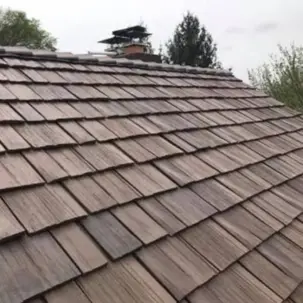
For historic homes in East Greenwich, coastal estates in Narragansett, and traditional architecture across Rhode Island, few materials match the timeless look of a genuine cedar shake roof. Cedar offers natural insulation, strong wind performance, and a texture that can age into a silver-gray patina.
But cedar is a natural wood product, not a synthetic commodity. It does not behave like asphalt. A cedar shake installation requires an understanding of wood movement, ventilation, and strict application standards.
If a contractor treats cedar like standard shingles, the roof can buckle, split, and fail early. Below are the non-negotiables that separate a premium cedar roof from a short-lived install.
The rule of thermal and moisture movement: keyways and spacing
Wood absorbs moisture from the air. In Rhode Island, cedar swells during wet weather and shrinks as it dries.
The keyway gap
Installers must leave a consistent keyway gap between adjacent shakes (commonly 1/4 inch to 3/8 inch, depending on the product and specification). Without that gap, shakes can press into each other as they swell, which can cause buckling, cracking, and fastener stress.
Staggering the joints
Vertical joints should be offset from course to course (often at least 1.5 inches). Staggering breaks up continuous water paths and helps keep the underlayment protected.
Material mixing and defect sorting on site
Even premium cedar shakes vary because they are cut from natural logs. A high-end cedar install includes a real workflow on the ground.
Grain sorting
Flat-grain pieces tend to be more prone to cupping or curling over time than edge-grain pieces. Bundles should be sorted so lower-quality pieces are used only where appropriate, and highly defective pieces are discarded.
Color and source mixing
Shakes should be pulled from multiple bundles throughout the install. That blends natural variations across the roof plane and helps avoid blocky color patches. It also supports a more uniform look as the roof weathers.
Fastening integrity: stainless steel or nothing
Cedar contains natural tannins and extracts that can react with standard metals.
If galvanized nails are used, the coating can break down over time. That can cause black staining on the wood face and can reduce fastener strength.
Premium cedar installations typically require stainless steel fasteners (commonly Type 304 or 316, especially in coastal environments). Each shake is generally fastened with two nails placed correctly relative to exposure and edges, per the manufacturer and cedar bureau guidelines.
A cedar roof is an architectural investment. The best results come from disciplined spacing, correct fastening, and documented workmanship.
Contact Mighty Dog Roofing of Rhode Island today to schedule your free roof inspection.
Rhode Island Service Locations:
Ashaway, Barrington, Bradford, Bristol, Carolina, Central Falls, Charlestown, Chepachet, Clayville, Coventry, Cranston, Cumberland, East Greenwich, East Providence, Exeter, Forestdale, Foster, Glendale, Greene, Greenville, Harrisville,Hope,Hope Valley, Hopkinton, Jamestown, Johnston, Kenyon, Kingston, Lincoln, Little Compton, Manville, Mapleville, Middletown, Narragansett, Newport, North Kingstown, North Providence, North Scituate, North Smithfield, Oakland, Pascoag, Pawtucket, Portsmouth, Providence, Riverside, Rockville, Rumford, Saunderstown, Shannock, Scituate, Slatersville, Smithfield, Tiverton, Wakefield, Warren, Warwick, West Greenwich, West Kingston, West Warwick, Westerly, Wood River Junction, Woonsocket, Wyoming
FAQ
How long does a cedar shake roof last in Rhode Island?
With premium cedar, stainless steel fasteners, and a properly ventilated roof assembly, cedar shake roofs can often last 30 to 40 years in New England. Actual lifespan depends on exposure, maintenance, and installation quality.
Why are there black stains underneath the nails on my wood roof?
Black streaks often indicate the fasteners are reacting with the cedar tannins. This is commonly seen when galvanized or non-stainless nails were used. It can be both a cosmetic issue and a sign of long-term fastener corrosion.
What is the difference between a cedar shingle and a cedar shake?
Cedar shingles are sawn for a smoother, more uniform look. Cedar shakes are typically split on at least one face, creating a thicker, more textured appearance.